---
title: Safety Guidelines for Dance Instructors
description: Safety guidelines for dance instructors to reduce risk, prevent injuries, and run safer classes. Learn what to implement and why it matters.
image: https://blog.nexofit.com/hubfs/Untitled%20design%20-%202026-04-28T140726.763.png
---
[info@nexoins.com](mailto:info@nexoins.com)
[310-937-2007](tel:3109372007)
[Login](https://nexo-production.herokuapp.com/login)
- [About Us](https://www.nexofit.com/about-us/)
- Services
- [Gym & Studio Insurance Protection](https://www.nexofit.com/service/insurance-protection/)
- [Alternative Balance](https://nexofit.com/insurance/alternativebalance/)
- [Insurance for Infant Swimming Resource](https://www.nexofit.com/service/isr-instructors)
- [Marketing Services](https://www.nexofit.com/marketing-services/)
- [Background Checks](https://www.backgroundsonline.com/nexo)
- [Free Injury Reporting](https://www.nexofit.com/service/free-injury-reporting/)
- [Insurance Renewal Reminder](https://resources.nexofit.com/insurance-renewal-reminder)
- [Client Deals](https://app.nexofit.com/member-benefits)
- [Brokers](https://www.fitnessnexo.com/)
- [Affinity Programs](https://nexofit.com/affinity-programs/)
- Resources
- [Blog](https://blog.nexofit.com/)
- [Client Stories](https://blog.nexofit.com/client-stories)
- [Ebooks](https://resources.nexofit.com/ebooks)
- [Gym Insurance Podcast](https://resources.nexofit.com/it-depends-podcast-interviews-eric-reingen)
- [Fitness Insurance by NEXO](https://resources.nexofit.com/fitness-insurance-by-nexo-interview)
- [Business Insurance: What You Need To Know](https://www.nexofit.com/business-insurance-what-you-need-to-know/)
- [Claims Center](https://www.nexofit.com/claims-center/)
- [Contact](https://www.nexofit.com/contact-us/)
- [Support](https://support.nexofit.com/)
[Apply Today](https://resources.nexofit.com/fitness-wellness-and-isr-instructors-insurance-applications)
# Safety Guidelines for Dance Instructors
1. [Home](https://www.nexofit.com/)
2. [Dance Studio](https://blog.nexofit.com/tag/dance-studio) [Energy Pro](https://blog.nexofit.com/tag/energy-pro)
3. Safety Guidelines for Dance Instructors
- by NEXO Team
- April 28, 2026
At the start of class, everything usually feels under control. The room is set, the choreography makes sense, and everyone is moving more or less together. From the outside, it looks like a safe, well-run environment. But that doesn’t always tell the full story.
What tends to catch instructors off guard is when injuries actually happen. It’s usually not during the hardest part of the routine or the moment everyone is paying close attention. More often, it shows up in the in-between, repeating a combination, transitioning too quickly, or when someone is trying to keep pace without saying anything. Those quieter moments are where things start to slip.
Over time, it becomes less about following set safety rules and more about how the class is unfolding in real time. Pacing drifts, corrections get missed, and small adjustments add up. Nothing stands out right away, but that’s often how strain builds without anyone noticing until later.
To understand fitness instructor safety and trainer safety, it’s important to look beyond obvious mistakes. Pay attention to subtle moments when a class starts to lose alignment, pacing, or visibility. These moments are where dance class safety and broader fitness safety compliance guidelines often begin to break down.
This guide is based on what instructors notice from real teaching experience. It explores where risk actually develops during everyday classes, and how instructors can spot those patterns early as part of fitness trainer risk management strategies.
## Why Safety Issues Don’t Usually Come From “Dangerous” Moves
Many people think injuries happen during advanced choreography or tough tricks. In fact, these are often the times when instructors and students are most focused. Everyone slows down, watches closely, and prepares for the movement.
Problems usually show up during routine sequences. These parts of class feel familiar, so students pay less attention to their technique. Their bodies move out of habit, and small mistakes start to repeat.
Most of the strain doesn’t come from the hardest parts of class. It tends to show up in the repetition. A simple jump done over and over can [wear on the joints](https://www.health.harvard.edu/healthy-aging-and-longevity/you-dont-say-can-your-joints-wear-out) more than a difficult move that’s only done once or twice. As the class goes on, you start to see small changes—landings get a little heavier, weight shifts slightly off, transitions get rushed.
That’s where things start to add up. It’s not one moment that stands out. It’s the routine parts of class, repeated just enough times for fatigue to quietly change how people move.
Also Read: [Maximize Your Dance Studio's Potential: Key Resources for Success](https://blog.nexofit.com/maximize-your-dance-studios-potential-key-resources-for-success)
## Where Injuries Actually Happen in Dance Classes
Many instructors notice that injuries often occur during transitions rather than during the main choreography. These moments often include situations like:
- Students rushing to catch the count after missing a step
- A dancer adjusting foot placement while turning into the next movement
- Someone repeating a jump or pivot while their balance is already off
In these moments, coordination can slip. This is where preventing [injury claims](https://blog.nexofit.com/common-claims-made-against-gyms-and-how-to-avoid-them) in fitness classes and broader liability prevention for fitness professionals become relevant.
## The Role of Fatigue in Technique Breakdown
Fatigue doesn’t set in all at once. It builds slowly as students repeat the same combinations. At first, the changes are small: a dancer’s posture shifts a bit, or their timing gets less precise.
Instructors often notice that students keep going even after their form starts to slip. They want to finish with the group or avoid stepping out of the routine.
For instructors, it’s hard to spot every small change as it happens. While correcting one group, another group might already be repeating the movement with less control.
This pattern is a big factor in [fitness instructor safety](https://www.futurelearn.com/info/courses/workplace-health-and-safety-in-a-fitness-setting/0/steps/265658). Fatigue is one of the main reasons technique breaks down, even when the choreography isn’t very demanding, and plays a key role in reducing insurance claims in fitness training over time.
## Physical Corrections: Where Instruction Turns Into Risk
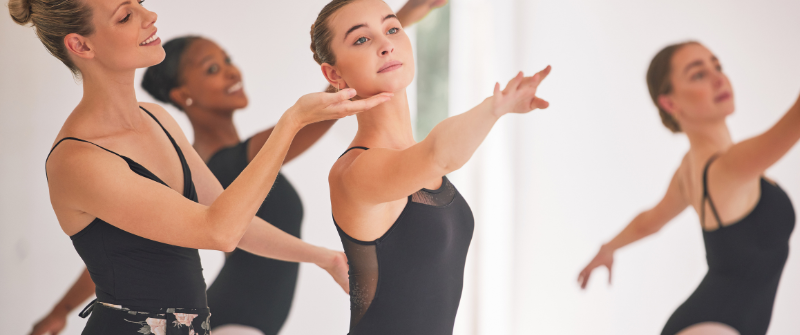
Hands-on corrections are part of how a lot of instructors teach. Sometimes it’s the easiest way to fix alignment or help someone feel the right position. But not every class handles it the same way. Some instructors stick to verbal cues, while others step in more directly.
Where it can get tricky is when there’s no clear pattern. If students aren’t sure when or how they’ll be adjusted, you start to see hesitation. Someone shifts too quickly, pulls back unexpectedly, or loses balance for a second. It’s not that corrections are the problem. It’s the inconsistency that throws people off.
## Class Size and Visibility: What Gets Missed
Even experienced instructors can’t watch every student at once. As classes get bigger, it’s harder to keep track of everyone’s technique and fatigue.
One student might fall behind the rhythm while others stay on count. Another might struggle with balance but stay quiet to avoid interrupting the class.
Instructors often notice these issues when they walk around the room and spot technique problems they couldn’t see from the front. A dancer who seemed stable before may already be compensating for fatigue.
Maintaining gym safety in these situations requires movement, visibility, and awareness across the entire room.
## Environment and Setup Issues That Add Up Over Time
The studio’s physical environment can affect safety in subtle ways. These issues rarely cause immediate problems but can slowly add strain over time. Such factors that instructors often encounter include:
- Flooring that does not absorb impact well
- Limited spacing between dancers during traveling combinations
- Footwear that does not match the surface or choreography
Over time, these details affect exercise safety and overall class control. Addressing them early supports stronger [fitness safety compliance guidelines](https://blog.nexofit.com/what-are-ada-standards-for-fitness-facilities) within the studio.
## Mixed Skill Levels and Pacing Problems
Dance classes often include students with different experience levels. Beginners may join faster classes, or intermediate dancers may attempt combinations that move more quickly than expected. Many still try to keep up instead of slowing down or stepping aside.
Instructors often notice this when students begin watching others instead of focusing on their own alignment. The movement becomes reactive rather than controlled.
Managing mixed skill levels through clear pacing and communication is a key part of fitness trainer safety rules for group classes.
## Warm-Ups and Progression: Where Classes Rush Too Fast
Warm-ups sometimes get shortened when schedules are tight or instructors feel pressure to start choreography quickly. While this may save time, it can affect how the rest of the class unfolds.
When warm-ups are rushed, joints and muscles may not be fully prepared for repeated sequences later in class. Students may move straight into jumps, turns, or traveling steps before their bodies are ready.
Gradually increasing intensity supports better injury prevention, fitness, and aligns with safety guidelines to reduce liability in fitness training.
## Where Risk Builds Without a Clear “Moment”
One of the most overlooked aspects of dance instructor safety is that injuries often accumulate without a single clear mistake. Instead, strain builds up slowly.
A student might repeat a landing many times while slightly off balance. Another dancer might shift their weight unevenly because they’re tired. No single moment stands out as the cause.
This pattern shows up often in insurance claims. Many cases relate to gradual overload rather than sudden incidents, reinforcing the importance of reducing insurance claims in fitness training through awareness and pacing.
## How Instructors Reduce Risk Without Overcorrecting
Experienced instructors rely on awareness more than strict rules. They watch how the whole room moves and adjust pacing as needed.
This might mean slowing down a sequence, pausing to reset posture, or changing repetition when fatigue shows up. These adjustments are part of practical fitness trainer risk management strategies.
## Where Safety Connects to Liability
Questions about safety often connect directly to responsibility. If instruction is inconsistent or unclear, confusion can develop during class.
Situations involving physical corrections, unclear expectations, or mixed pacing can leave students unsure how to move. Over time, these patterns can affect both safety and accountability, especially when considering legal safety requirements for fitness instructors.
Also Read: [Is Dance Studio Insurance Necessary?](https://blog.nexofit.com/is-dance-studio-insurance-necessary)
## Final Perspective
Strong fitness safety doesn’t come from memorizing rules. It grows from how a class is structured, paced, and observed over time.
Most safety problems don’t start with big mistakes. They usually build up from repetition, fatigue, and times when instructors can’t see every student at once.
For instructors and studios thinking about [long-term protection](https://nexofit.com/insurance/alternativebalance/), understanding liability prevention for fitness professionals is part of the broader conversation. Awareness, structure, and proper coverage all work together.
For instructors and studios thinking about long-term protection, [learning how NEXO supports them](https://www.google.com/maps/place/NEXO+Insurance+Services,+Inc./data=!4m2!3m1!1s0x0:0x4527b2907308df2c?sa=X&ved=1t:2428&ictx=111) is part of the broader conversation about safety and responsibility. Understanding fitness instructor insurance and instructor liability coverage can help ensure instructors have support as they continue to run strong, well-managed classes.
[Contact NEXO today](https://nexofit.com/contact/) to review your coverage options and learn how specialized protection can support dance instructors and studios.
[](https://blog.nexofit.com/hs/cta/wi/redirect?encryptedPayload=AVxigLJhjNcIg3RszTdRqntdKt8hyuYjRz1qn89gYBGCcUUF9VLpHz4%2FMsCI8p7Mv1Q3d5%2FaU0hTG4UDel8mNgOivn59gvtRmDYTUX4JSwipyqfNes%2Bsn3ODe5UG6EFEyIEkGH2PrtuTYggapYIvEqyAbOOSdguTLvamro6Q5j9MM3vxnY9FpWHTuQIzKBsIBsNG9cwy%2BEzZ5rqTgq7L5Enc0jR8XCphTQCBTy1iiLnOA18n9QTylBMNrJYGq6Fmq4%2BAI88sF7oBQtS8sok206C3mS7889fi&webInteractiveContentId=220616986294&portalId=8070281)
##### Categories
- [Gym Insurance (89)](https://blog.nexofit.com/tag/gym-insurance)
- [Opening a Gym (34)](https://blog.nexofit.com/tag/opening-a-gym)
- [Martial Arts Insurance (32)](https://blog.nexofit.com/tag/martial-arts-insurance)
- [Functional Fitness (27)](https://blog.nexofit.com/tag/functional-fitness)
- [Gym Operations (24)](https://blog.nexofit.com/tag/gym-operations)
- [Dance Studio (20)](https://blog.nexofit.com/tag/dance-studio)
- [Martial Arts Gym (20)](https://blog.nexofit.com/tag/martial-arts-gym)
- [Pilates Studio (18)](https://blog.nexofit.com/tag/pilates-studio)
Fill out a short form to contact us with your questions or to receive a customized quote.
##### Recent Posts
- [ Expanding Your Personal Training Services? Review Your Insurance First](https://blog.nexofit.com/expanding-your-personal-training-services-review-your-insurance-first)
September 14, 2026
- [ One Fitness Business, Multiple Services: Does One Insurance Policy Cover Everything?](https://blog.nexofit.com/one-fitness-business-multiple-services-does-one-insurance-policy-cover-everything)
September 4, 2026
- [ Can Martial Arts Schools Rent Their Space to Other Businesses?](https://blog.nexofit.com/can-martial-arts-schools-rent-their-space-to-other-businesses)
September 2, 2026
- [ Does Dance Studio Insurance Cover Competition and Travel Teams?](https://blog.nexofit.com/does-dance-studio-insurance-cover-competition-and-travel-teams)
August 21, 2026
- [ Stretch Therapy vs. Personal Training: Does Your Insurance Change?](https://blog.nexofit.com/stretch-therapy-vs.-personal-training-does-your-insurance-change)
August 14, 2026
[](https://cta-redirect.hubspot.com/cta/redirect/8070281/90a7451b-c6df-4a06-adb6-20aae8015349)
#### Our Services
- [Gym And Studio Insurance Protection](https://www.nexofit.com/service/insurance-protection/)
- [Background Checks](https://www.backgroundsonline.com/nexo)
- [Free Injury Reporting](https://www.nexofit.com/service/free-injury-reporting/)
- [Insurance Renewal Reminder](https://resources.nexofit.com/insurance-renewal-reminder)
- [ISR Instructors](https://www.nexofit.com/service/isr-instructors)
- [Alternative Balance](https://nexofit.com/insurance/alternativebalance/)
- [Affinity Programs](https://nexofit.com/affinity-programs/)
#### Newsletter
Sign up for valuable information delivered to your email for additional help on protecting and growing your business.
#### About Us
We are a dedicated team of passionate individuals helping community-owned businesses with their biggest challenge - finding affordable and comprehensive insurance. With over 15 years in business, our clients know they are in good hands with us.
- [111 N. Sepulveda Blvd., Suite 325 Manhattan Beach, CA 90266](https://www.google.com/maps?q=111+N.+Sepulveda+Blvd.,+Suite+325+Manhattan+Beach,+CA+90266&um=1&ie=UTF-8&sa=X&ved=2ahUKEwiU_ffYx4nqAhXCu54KHQBKBr4Q_AUoAXoECAwQAw)
- [info@nexoins.com](mailto:info@nexoins.com)
- [310-937-2007](tel:3109372007)
© 2026 Nexo Fitness Solutions | All Rights Reserved
- [Privacy Policy](https://www.nexofit.com/privacy-policy/)
- [Terms of Service](https://www.nexofit.com/terms-of-service/)