---
title: "Injury Waivers Aren’t Enough: Insurance Gaps Jiu-Jitsu Owners Overlook"
description: Don’t let insurance gaps put your Jiu-Jitsu gym at risk. Learn what waivers miss and how to fully protect your studio. Get started now!
image: https://blog.nexofit.com/hubfs/Untitled%20design%20-%202026-01-21T122104.613.png
---
[info@nexoins.com](mailto:info@nexoins.com)
[310-937-2007](tel:3109372007)
[Login](https://nexo-production.herokuapp.com/login)
- [About Us](https://www.nexofit.com/about-us/)
- Services
- [Gym & Studio Insurance Protection](https://www.nexofit.com/service/insurance-protection/)
- [Alternative Balance](https://nexofit.com/insurance/alternativebalance/)
- [Insurance for Infant Swimming Resource](https://www.nexofit.com/service/isr-instructors)
- [Marketing Services](https://www.nexofit.com/marketing-services/)
- [Background Checks](https://www.backgroundsonline.com/nexo)
- [Free Injury Reporting](https://www.nexofit.com/service/free-injury-reporting/)
- [Insurance Renewal Reminder](https://resources.nexofit.com/insurance-renewal-reminder)
- [Client Deals](https://app.nexofit.com/member-benefits)
- [Brokers](https://www.fitnessnexo.com/)
- [Affinity Programs](https://nexofit.com/affinity-programs/)
- Resources
- [Blog](https://blog.nexofit.com/)
- [Client Stories](https://blog.nexofit.com/client-stories)
- [Ebooks](https://resources.nexofit.com/ebooks)
- [Gym Insurance Podcast](https://resources.nexofit.com/it-depends-podcast-interviews-eric-reingen)
- [Fitness Insurance by NEXO](https://resources.nexofit.com/fitness-insurance-by-nexo-interview)
- [Business Insurance: What You Need To Know](https://www.nexofit.com/business-insurance-what-you-need-to-know/)
- [Claims Center](https://www.nexofit.com/claims-center/)
- [Contact](https://www.nexofit.com/contact-us/)
- [Support](https://support.nexofit.com/)
[Apply Today](https://resources.nexofit.com/fitness-wellness-and-isr-instructors-insurance-applications)
# Injury Waivers Aren’t Enough: Insurance Gaps Jiu-Jitsu Owners Overlook
1. [Home](https://www.nexofit.com/)
2. [Jiu-Jitsu Gym](https://blog.nexofit.com/tag/jiu-jitsu-gym)
3. Injury Waivers Aren’t Enough: Insurance Gaps Jiu-Jitsu Owners Overlook
- by NEXO Team
- January 21, 2026
## The False Sense of Security Waivers Create
Almost all Jiu-Jitsu schools use injury waivers. They are easy to implement, familiar, and feel reassuring. A student signs the form, acknowledges the risks, and steps onto the mat. That signature gives many owners a sense of security.
It's easy to understand why people think this: if they signed, they're safe. That idea spreads quickly among gym owners, especially hobbyists-turned-entrepreneurs, who see waivers as the best protection against injury claims.
This is the issue. That idea falls apart quickly when someone is actually injured. When medical bills rise, emotions run high, or a lawyer gets involved, the waiver doesn't mean as much to most owners as they think.
Waivers are helpful. They are important. But they don't protect you. They are just one part of the broader risk picture. The first step in protecting your academy, your income, and your future is to know when waivers stop protecting you.
## What Waivers Actually Do (And What They Don’t)
A waiver of liability is a legal document that demonstrates a participant's knowledge of the risks of an activity. In Jiu-Jitsu, these risks include [joint locks](https://en.wikipedia.org/wiki/Joint_lock), takedowns, and close contact with others. Most courts agree that adults can take risks they are aware of.
Waivers do not eliminate liability. They reduce exposure, but they don't eliminate it. The waiver often loses its power if the injury claim says the business was careless.
Owners don't always expect courts to look at combat sports waivers as closely as they do. Judges don't just look at whether a form was signed; they also consider how the injury occurred. They distinguish between taking a risk and avoiding harm.
Many owners miss an important legal difference. A student may risk being submitted during the rolling period. They don't take on the risk of unsafe mats, bad supervision, or careless teaching. Waivers don't offer much protection when claims go beyond mere negligence.
This is where martial arts owners' liability waivers begin to show weakness.
## Why Jiu-Jitsu Carries Unique Risk That Waivers Can’t Cover
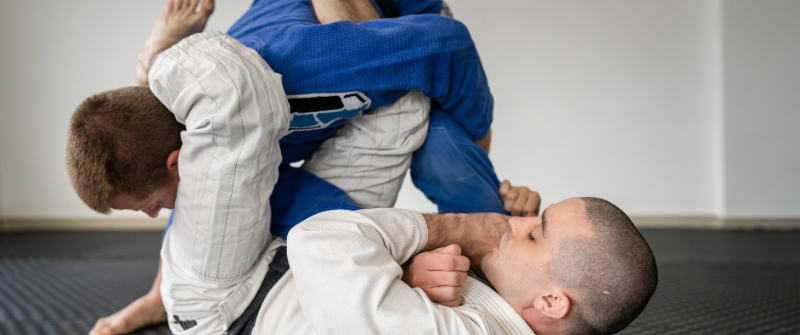
Jiu-Jitsu is not a standard form of fitness. Sparring, submissions, takedowns, and joint locks in real life generate forces that are difficult to control fully. Even experienced practitioners are injured during routine training.
Controlled drills are predictable. Rolling is not. Many injuries occur when people are transitioning, scrambling, or when their skill levels don't match. People don't usually mean to hurt themselves, but these injuries happen a lot.
Jiu-Jitsu can also cause both short-term and long-term injuries. A [popped elbow](https://my.clevelandclinic.org/health/diseases/17942-dislocated-elbow) is obvious and immediate. A neck injury that worsens over months is harder to trace. Repetitive trauma matters in claims because it makes it hard to tell when and how the injury really happened.
Jiu-Jitsu schools see patterns of shoulder injuries, spinal strain, and [joint degeneration](https://www.sciencedirect.com/topics/pharmacology-toxicology-and-pharmaceutical-science/joint-degeneration). These patterns complicate matters for doctors and lawyers. This is why claims for injury liability in Jiu-Jitsu often take longer and cost more than expected.
Also Read: [Why Jiu-Jitsu Schools Face Higher Liability Than Other Gyms and How to Manage It](https://blog.nexofit.com/why-jiu-jitsu-schools-face-higher-liability-than-other-gyms-and-how-to-manage-it)
## The Most Common Insurance Gaps Jiu-Jitsu Owners Overlook
### Instructor Liability Gaps
When a coach shows a move, there is no longer a line between teaching and touching. When a student gets hurt during a lesson, claims often focus on how the move was taught.
Teaching can quickly turn into alleged negligence. Was that method right for that student? Was the speed okay? Was the supervision good enough?
Many business owners believe that classifying their coaches as independent contractors protects them. In practice, that label doesn't hold up very often. Claims often bring the business into the case anyway.
### Participant vs Spectator Injuries
Not everyone at the academy is working out. Every day, parents, friends, and guests come and go in the space. Waivers often don't apply if a spectator falls, runs into rolling athletes, or is injured near the mats.
These claims fall into a gray area that many policies don't cover. This is a significant problem: gym insurance gaps that owners only discover after something happens.
### Youth Programs and Minor-Specific Exposure
Youth classes bring growth and community value, but they also increase legal scrutiny. Even with parental waivers, courts handle injuries to minors differently.
Kids can't take risks the way adults can. That by itself makes things more dangerous. When you add developing joints and varying levels of maturity, claims become more complex.
This is where Jiu-Jitsu academy insurance needs to be set up very carefully.
### Open Mat and Visiting Athlete Exposure
Even though open mats seem casual, injuries there can still lead to claims. It may not be clear who the visiting athletes are. Some policies quietly exclude non-members or cover them only during supervised sessions.
Owners often think that coverage applies to everyone. That assumption can cost a lot.
## When a Waiver Fails in the Real World
Waivers often fail in predictable scenarios, such as injuries that worsen over time, prompting people to question whether to wait for care or continue training. Unsafe condition claims mainly address mats, spacing, or overcrowding.
Another cause is inadequate supervision. If a more experienced player rolls aggressively with a beginner and no coach intervenes, waivers offer little protection.
Even if a claim is valid, the costs of defending it in court add up quickly. Costs like lawyer fees, expert reviews, and time away from the business stack up. Winning a case does not mean it was cheap.
## Why Generic Gym Insurance Often Falls Short
Many gym policies get Jiu-Jitsu wrong. They classified it under general fitness or non-contact training. That classification creates exclusions that surface only during claims.
Policy language often hides these limits deep in endorsements. Live sparring, takedowns, or competitions may be partially excluded or capped.
Low premiums can be appealing, especially for new gyms. But they often mean that coverage is limited. Having insurance doesn't always mean you're safe.
This is a common reason why people who buy Jiu-Jitsu gym insurance without specialization fail.
## The Financial Risk Most Owners Never Calculate
Legal defence alone can cripple a gym. Even small claims can cost tens of thousands of dollars before settlement. When medical bills rise quickly, insurance limits become important.
Some claims exceed the policy limits, putting owners at risk. In some cases, personal assets may be involved, especially for owner-operated academies.
Claims for serious injuries can also disrupt business operations. Classes stop. Reputation goes down. Fewer people join. There is no guarantee of recovery.
This is the part of combat sports insurance that most generic policies don't cover very well.
Also Read: [Are You Personally Liable? What Every Jiu-Jitsu Instructor Should Know](https://blog.nexofit.com/are-you-personally-liable-what-every-jiu-jitsu-instructor-should-know)
## What Proper Jiu-Jitsu Insurance Should Actually Include
Proper coverage is built around how academies truly operate. It should include:
- Combat-sport-specific liability coverage designed for live training.
- Protection for instructors during demonstrations and coaching.
- Coverage for participant and non-participant injuries.
- Clear provisions for youth programs and minors.
- Open mat and guest coverage without quiet exclusions.
- Plain language definitions that remove gray areas.
This type of coverage works because it aligns with real-life experiences at the academy. When insurance matches how training really works, it's easier to file claims, stronger in defending, and owners don't have to rely on assumptions when things get tough.
## How NEXO Approaches Jiu-Jitsu Risk Differently
NEXO is designed specifically for high-risk fitness and combat sports, with a focus on injury patterns in Jiu-Jitsu. Sparring, takedowns, joint locks, and hands-on instruction are standard parts of training and do not require separate explanation. This approach helps ensure coverage matches what happens on the mat every day.
Policies are based on how the academy actually operates. From the start, daily classes, open mats, youth programs, and visiting athletes are all planned and documented, so coverage isn't dependent on conjecture or vague definitions. NEXO also assists owners in identifying potential vulnerabilities in their space, class structure, and supervision before claims occur.
NEXO remains involved after injuries become claims, providing support beyond policy drafting. They help academy owners know what to report, the required documents, and the next steps. They provide consistent, knowledgeable support in tough times, rooted in Jiu-Jitsu understanding, not just insurance terms.
Also Read: [Rolling Safely: The Ultimate Guide to Fitness Insurance for Jiu Jitsu Practitioners](https://blog.nexofit.com/rolling-safely-the-ultimate-guide-to-fitness-insurance-for-jiu-jitsu-practitioners)
## Waivers + Insurance = A Complete Risk Strategy
Waivers are still important. They track informed participation and help people understand what to expect. But they should never be the main way to protect your academy.
There are many levels to risk management. Waivers are one layer. Another type is specialized insurance. Smart owners don't make assumptions; they build systems.
This method reduces surprises and makes outcomes more stable over time.
## Conclusion: Serious Academies Protect More Than Their Mats
As academies grow, the risks they face increase as well. More students, more classes, and more people visiting the school mean more opportunities for claims. That growth is a sign that things are going well, but it also increases risk.
Being ready can make the difference between staying in business and closing your doors. It's not a bad idea to honestly assess your coverage. It's a smart move to protect what you've built.
A focused review with NEXO can help you figure out if your current coverage really covers how your academy works. NEXO offers consultations that help you understand your training model, your programs, and the risks you face.
[Contact NEXO](https://resources.nexofit.com/contact-us-articles) to get a clear picture of where your coverage is strong and where it might not be, so your protection matches the reality of Jiu-Jitsu.
[](https://blog.nexofit.com/hs/cta/wi/redirect?encryptedPayload=AVxigLJIDIuv548tNJB0kRNCPJ4BN7KV09IVRwPYtCbyKYOcgOg8ILkRfS2hEfNSw0fDvJOqH%2F%2FyjrgxBxTMBF9NnLtp2IJvUpWERz0rC8nf7Or98LqLtDIr7fxMsB0zlXyRwebs%2Bd3R1UftEKJMknIRVeRN%2BTjjgUy5ptUnp%2FmM9CIViZyXCXrwGgj8mQKHy6DJ%2F5zLirrCx6KyjUkJHFTrTVs6pkjTck6DySz61p1Q5gza2hsnyYGJhFWE6d04jqVe2GccqctwEtoX0aawDosk5rVvXSFdsGQOv2cc&webInteractiveContentId=191321601337&portalId=8070281)
##### Categories
- [Gym Insurance (89)](https://blog.nexofit.com/tag/gym-insurance)
- [Opening a Gym (34)](https://blog.nexofit.com/tag/opening-a-gym)
- [Martial Arts Insurance (32)](https://blog.nexofit.com/tag/martial-arts-insurance)
- [Functional Fitness (27)](https://blog.nexofit.com/tag/functional-fitness)
- [Gym Operations (24)](https://blog.nexofit.com/tag/gym-operations)
- [Dance Studio (20)](https://blog.nexofit.com/tag/dance-studio)
- [Martial Arts Gym (20)](https://blog.nexofit.com/tag/martial-arts-gym)
- [Pilates Studio (18)](https://blog.nexofit.com/tag/pilates-studio)
Fill out a short form to contact us with your questions or to receive a customized quote.
##### Recent Posts
- [ Expanding Your Personal Training Services? Review Your Insurance First](https://blog.nexofit.com/expanding-your-personal-training-services-review-your-insurance-first)
September 14, 2026
- [ One Fitness Business, Multiple Services: Does One Insurance Policy Cover Everything?](https://blog.nexofit.com/one-fitness-business-multiple-services-does-one-insurance-policy-cover-everything)
September 4, 2026
- [ Can Martial Arts Schools Rent Their Space to Other Businesses?](https://blog.nexofit.com/can-martial-arts-schools-rent-their-space-to-other-businesses)
September 2, 2026
- [ Does Dance Studio Insurance Cover Competition and Travel Teams?](https://blog.nexofit.com/does-dance-studio-insurance-cover-competition-and-travel-teams)
August 21, 2026
- [ Stretch Therapy vs. Personal Training: Does Your Insurance Change?](https://blog.nexofit.com/stretch-therapy-vs.-personal-training-does-your-insurance-change)
August 14, 2026
[](https://cta-redirect.hubspot.com/cta/redirect/8070281/90a7451b-c6df-4a06-adb6-20aae8015349)
#### Our Services
- [Gym And Studio Insurance Protection](https://www.nexofit.com/service/insurance-protection/)
- [Background Checks](https://www.backgroundsonline.com/nexo)
- [Free Injury Reporting](https://www.nexofit.com/service/free-injury-reporting/)
- [Insurance Renewal Reminder](https://resources.nexofit.com/insurance-renewal-reminder)
- [ISR Instructors](https://www.nexofit.com/service/isr-instructors)
- [Alternative Balance](https://nexofit.com/insurance/alternativebalance/)
- [Affinity Programs](https://nexofit.com/affinity-programs/)
#### Newsletter
Sign up for valuable information delivered to your email for additional help on protecting and growing your business.
#### About Us
We are a dedicated team of passionate individuals helping community-owned businesses with their biggest challenge - finding affordable and comprehensive insurance. With over 15 years in business, our clients know they are in good hands with us.
- [111 N. Sepulveda Blvd., Suite 325 Manhattan Beach, CA 90266](https://www.google.com/maps?q=111+N.+Sepulveda+Blvd.,+Suite+325+Manhattan+Beach,+CA+90266&um=1&ie=UTF-8&sa=X&ved=2ahUKEwiU_ffYx4nqAhXCu54KHQBKBr4Q_AUoAXoECAwQAw)
- [info@nexoins.com](mailto:info@nexoins.com)
- [310-937-2007](tel:3109372007)
© 2026 Nexo Fitness Solutions | All Rights Reserved
- [Privacy Policy](https://www.nexofit.com/privacy-policy/)
- [Terms of Service](https://www.nexofit.com/terms-of-service/)